


After a long journey from London with a stop in Kuala Lumpur, my partner and I arrived in Sandakan, Borneo on the 17th of May 2026. We spent the late afternoon and evening in Sandakan and planned a visit to the Rainforest Discovery Centre (RDC) the very next day.
The official opening hours for the RDC is 8am – 5pm, but as I’d read that the area is open to explore with no locked gates we took a Grab (taxi) and arrived as the sun was rising just after 6am.
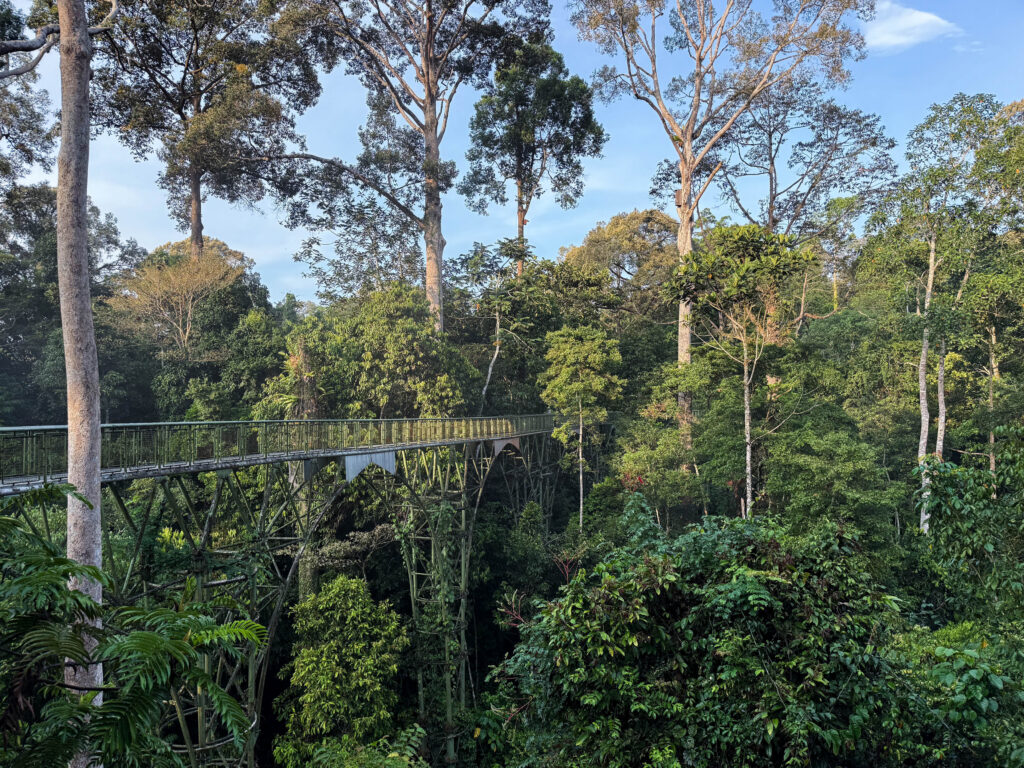
The main reason for wanting to go to the RDC is the long canopy bridge and towers that gives access to watch and photograph animals rarely seen from the ground. Giving an eye level view to birds and animals high in the trees will also provide the opportunity for much better photos.
For bird identification I used the Phillipps’ Guide to the Birds of Borneo. I really liked all the additional ecology information in this book, but when comparing two or more similar looking species I found that the description of the birds were lacking.
If you’re unfamiliar with the OM System, it’s a micro four third system which has a small sensor with a crop factor of x2. So 500mm is 1000mm if compared to a full frame camera.
As planned, we arrived early and found no locked gates that stopped us from entering the centre. There was however a small hut marked security, and when a man in a black uniform opened the door and started to approach us, I was sure our morning adventure was over and we’d have to wait until the official opening of the reserve.
To my surprise he pulled out his phone and asked if we could pose for a photo, and I think he said something about a tiktok post… Sure thing, a quick snap and we were on our way to the canopy bridge.
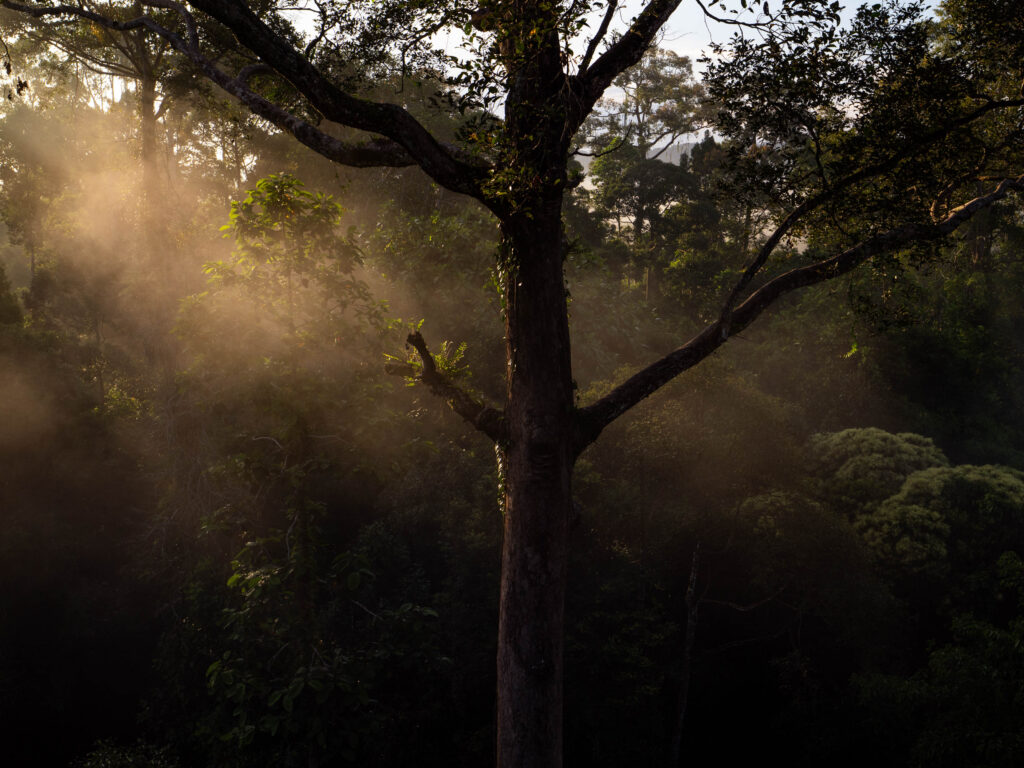
The bridge starts by the cafe and a gentle incline quickly brought us into a different world amongst the trees. Even though Sepilok is hot and humid, the temperature is much more tolerable early in the morning. The bridge feels solid and as we walk further up and into the trees we heard birds singing and chirps and calls from creatures I couldn’t see and had no idea what they were.
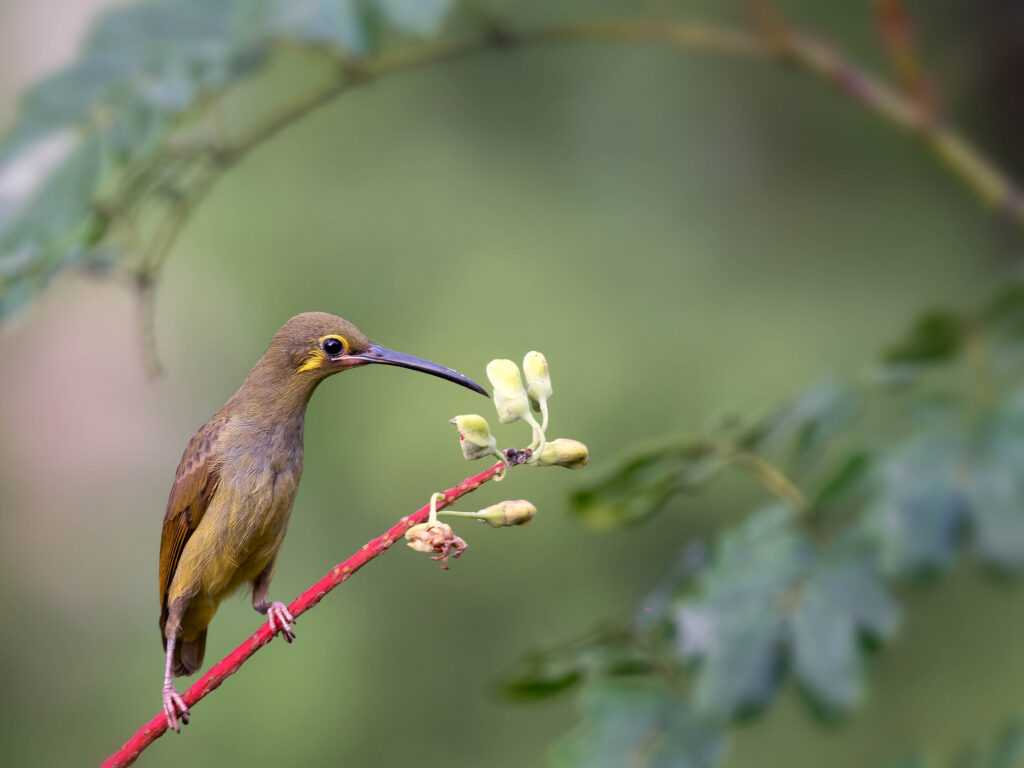
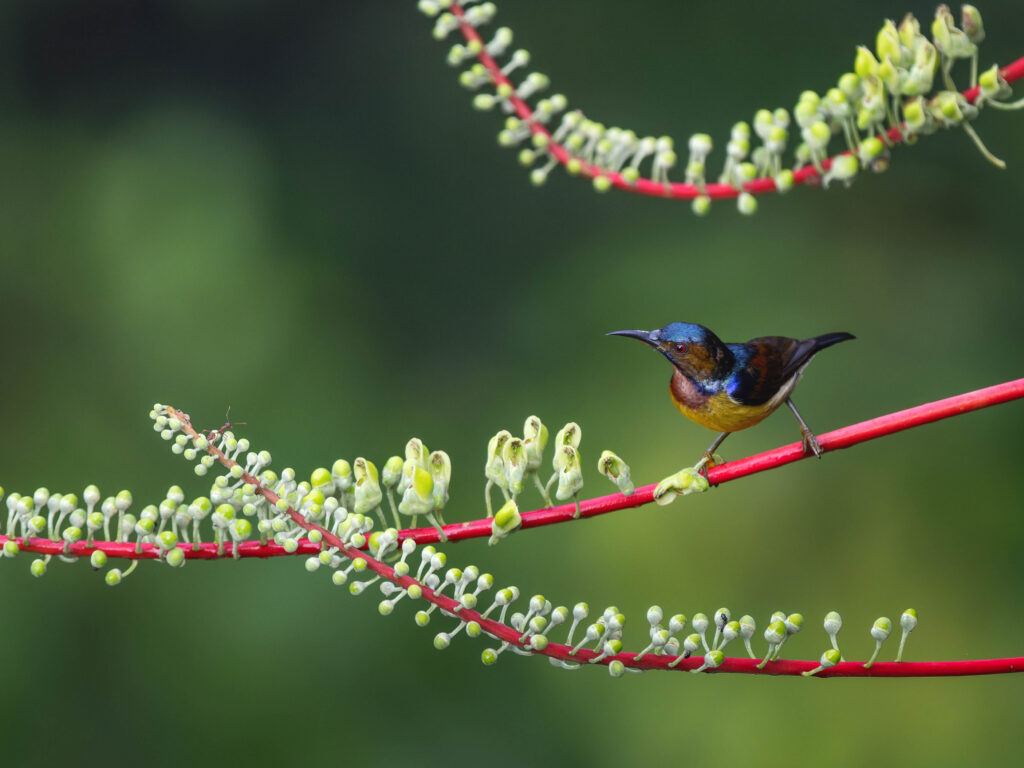
From the canopy bridge, the first bird we saw was a yellow-eared spiderhunter. It moved quickly in and out of cover, but every now and then it would venture further out on the edge of a thin red branch of the tree. This was perfect for photography and I could move around to try and get a pleasing background. After a few minutes the spiderhunter was joined by what we’re pretty sure was a brown-throated sunbird.
For editing my images I use DxO PureRaw to improve the RAW file and reduce any noise present in the images and then I tend to use DxO Nik Collection Color Efex for a fast, but powerful edit.
(The discount only applies for new users, or new emails used to sign up 😉
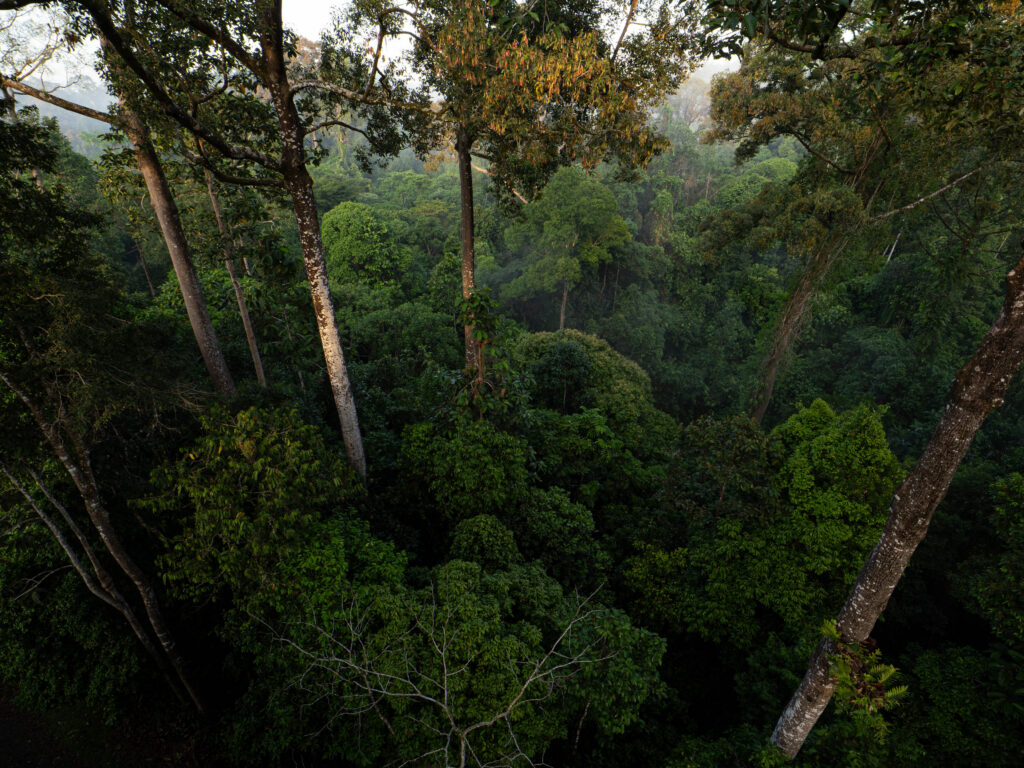
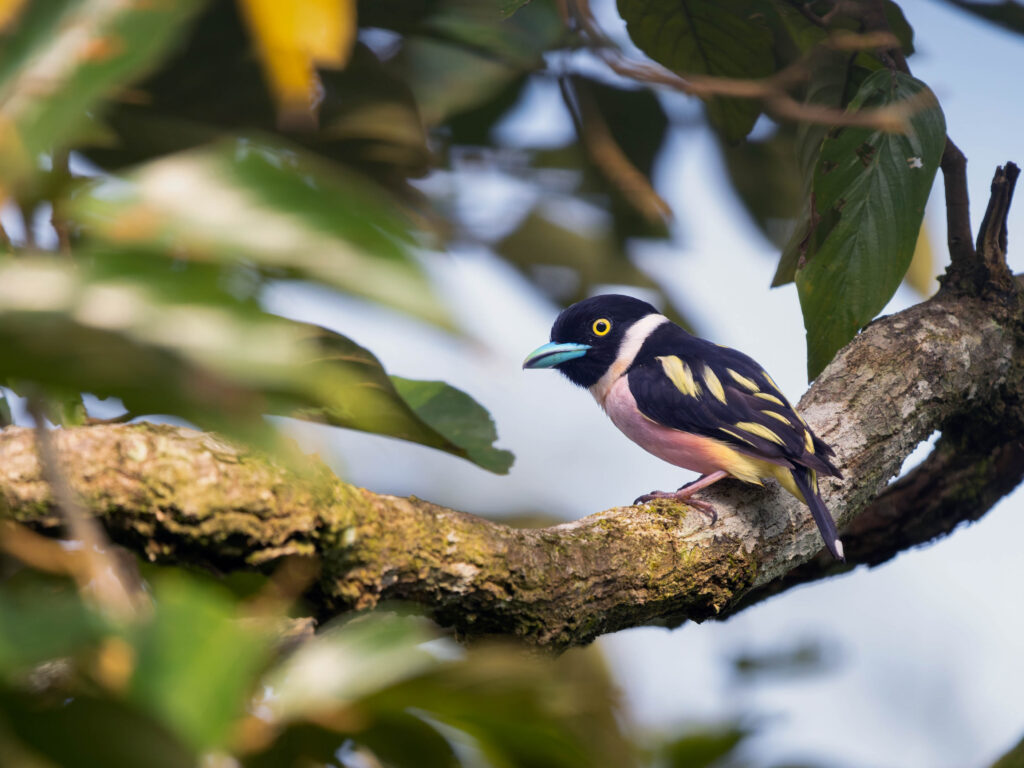
After some exploration of the canopy bridges we made our way to the Hornbill Tower which has some fantastic views! No hornbills in sight, but there were two different birds that had a nest right next to the viewing platform. A Wallace’s hawk-eagle and a black and yellow broadbill.
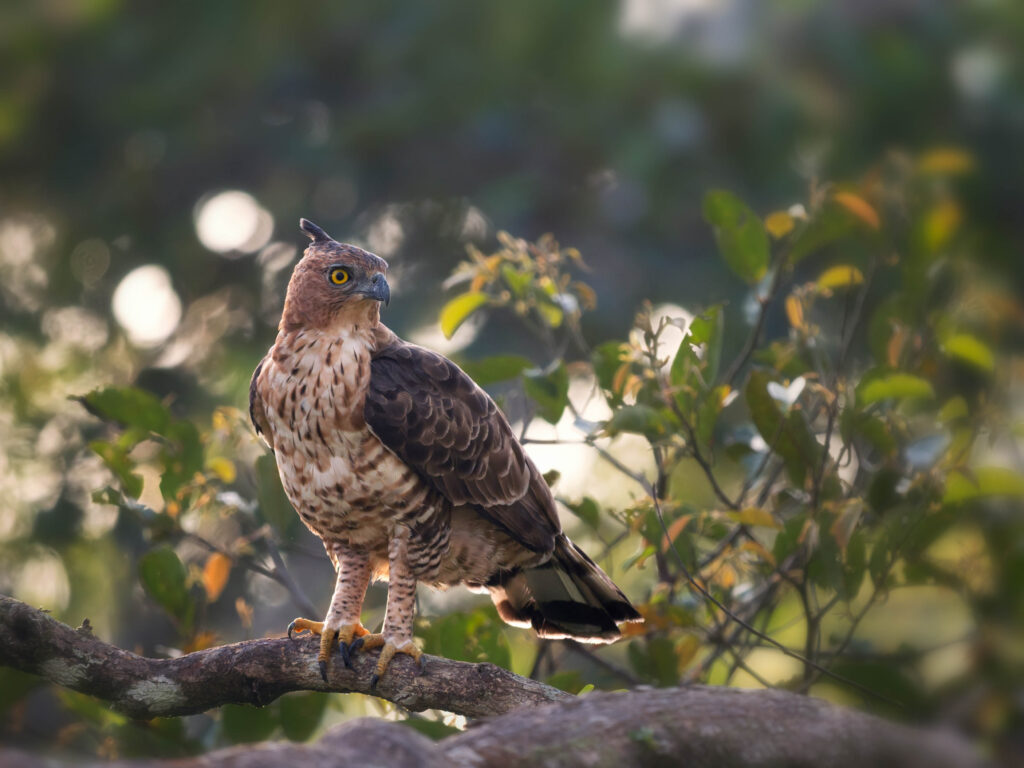
Wallace’s hawk eagle is named after Alfred Russel Wallace, a naturalist who spent 8 years from 1854 exploring the Malay Archipelago including Borneo and famously (though much forgotten) co-discovered the theory of evolution with Charles Darwin. Wallace’s book, The Malay Archipelago is a fantastic book from his travels in the area and was accompanying me for the trip.
The hawk eagle’s nest was hidden in a fork of a massive tree next to the platform, I don’t think we would have noticed it had it not been for the hawk eagle landing on the nest as we were scouting for wildlife.
The black and yellow broadbill nest was on the opposite side of the platform, it looked like a poorly constructed weaverbird’s nest and was barely hanging on at the edge of a branch. In fact when we came back two weeks later the nest was no where to be found. Most likely, lying on the ground 27m below.
The black and yellow broadbill is a fantastically unreal looking bird, with a head that looks too big for it’s plum body and a broad blue bill which gives it an angry duck looking appearance when viewed straight on.
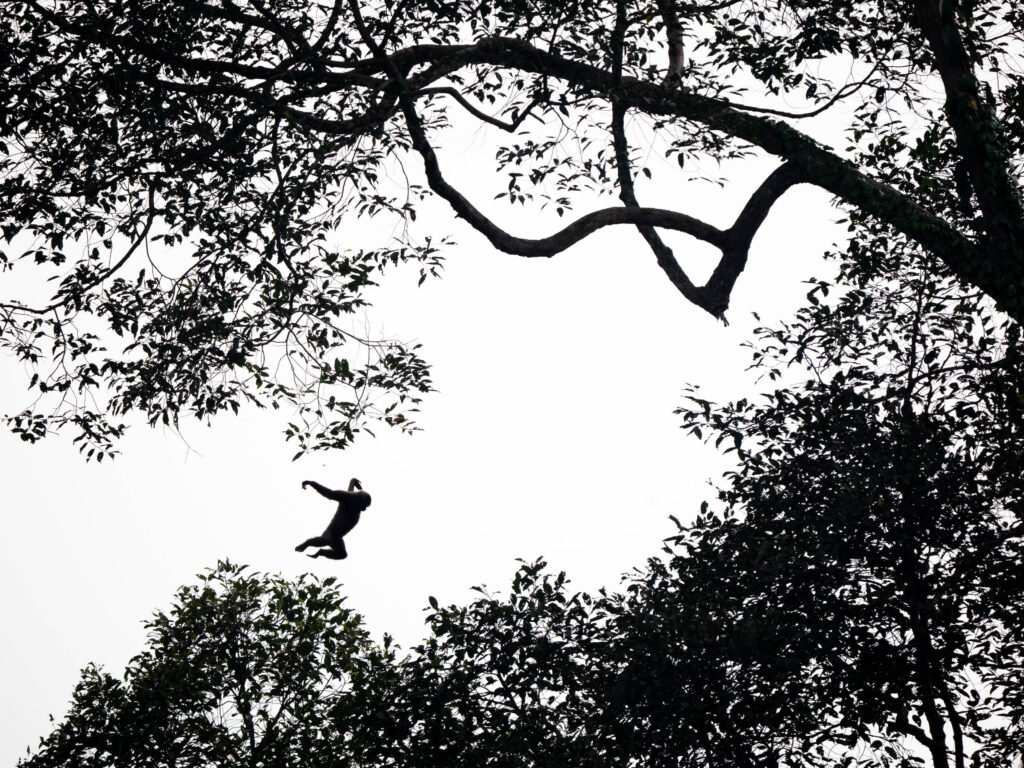
We’d heard the gibbons calling for a while before we finally laid eyes on them. We’d come to learn over our time in Borneo that the way to spot primates was by noticing branches swaying, and that’s what we saw when we first noticed the gibbons. They were far away, but they could only be the North Borneo gibbon. At first I didn’t think there was much of an image to be had, but when I saw one of them jump down to the trees below I saw an excellent opportunity for a silhouette image. I switched to my Custom Mode 3 where I’ve programmed Pro Capture, a feature on the OM System which allows me to save images back in time (sort of). It helps to get images of an action that happens fast, and I captured a great sequence of a gibbon in the air.
Just before we left the Hornbill Tower we also saw some hornbills in flight, but unfortunately I was too slow for a photo.
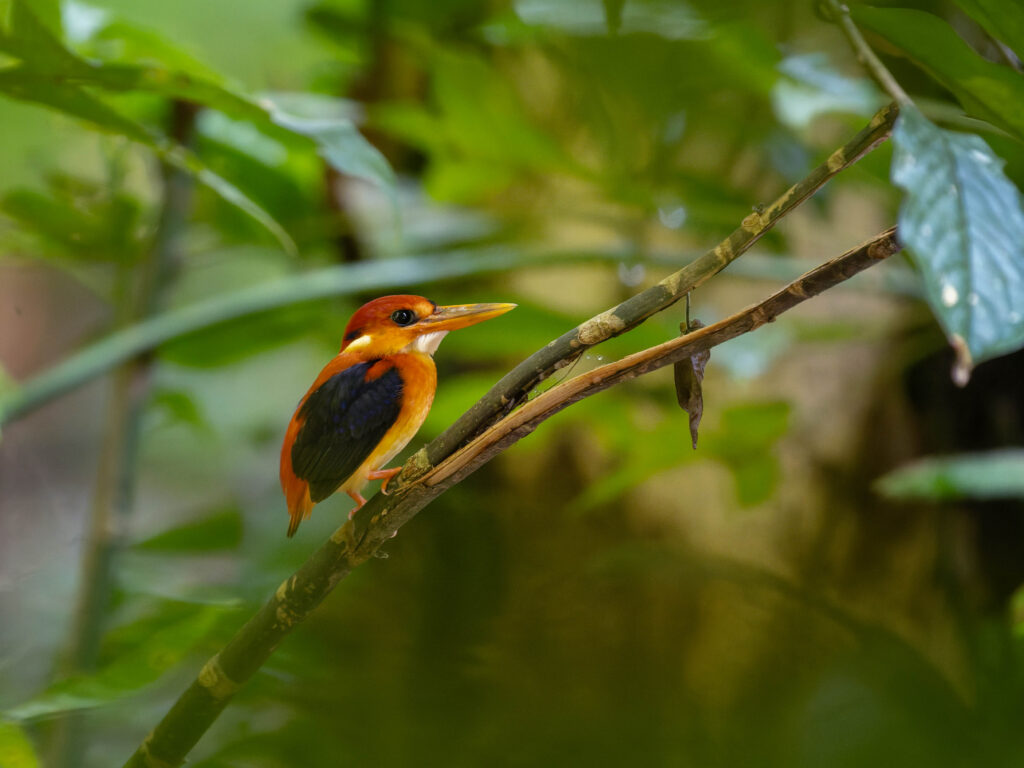
Walking the paths below the canopy bridge we came across a sign that said “Kingfisher Trail”, even though we were getting hungry we decided to take a little detour to try our luck. A few 100 metres along the trail we saw a burst of colour in amongst all the greens. It was a rufous-backed kingfisher. It landed on a branch in the open so I got a few images, though with a messy background. When it flew along, I followed and found a tiny gap in between some vegetation to photograph through. Unfortunately, the kingfisher never turned it’s head before flying away again so I only got a few images of it’s back. Oh well, I got some ok shots and just seeing it was amazing!
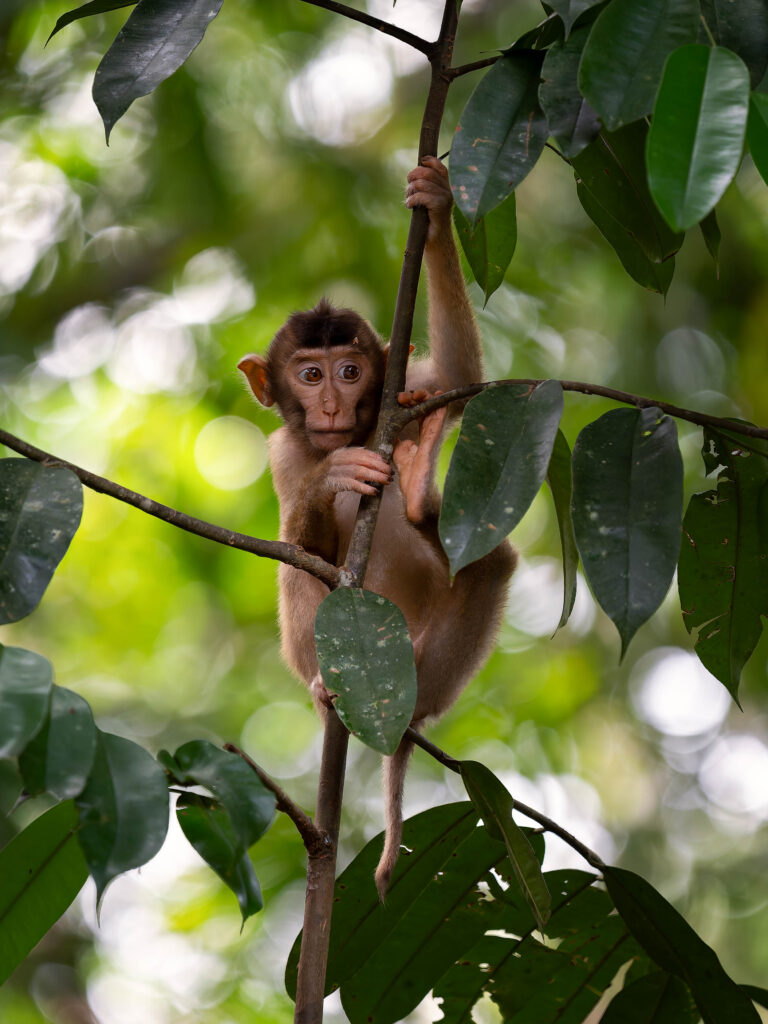
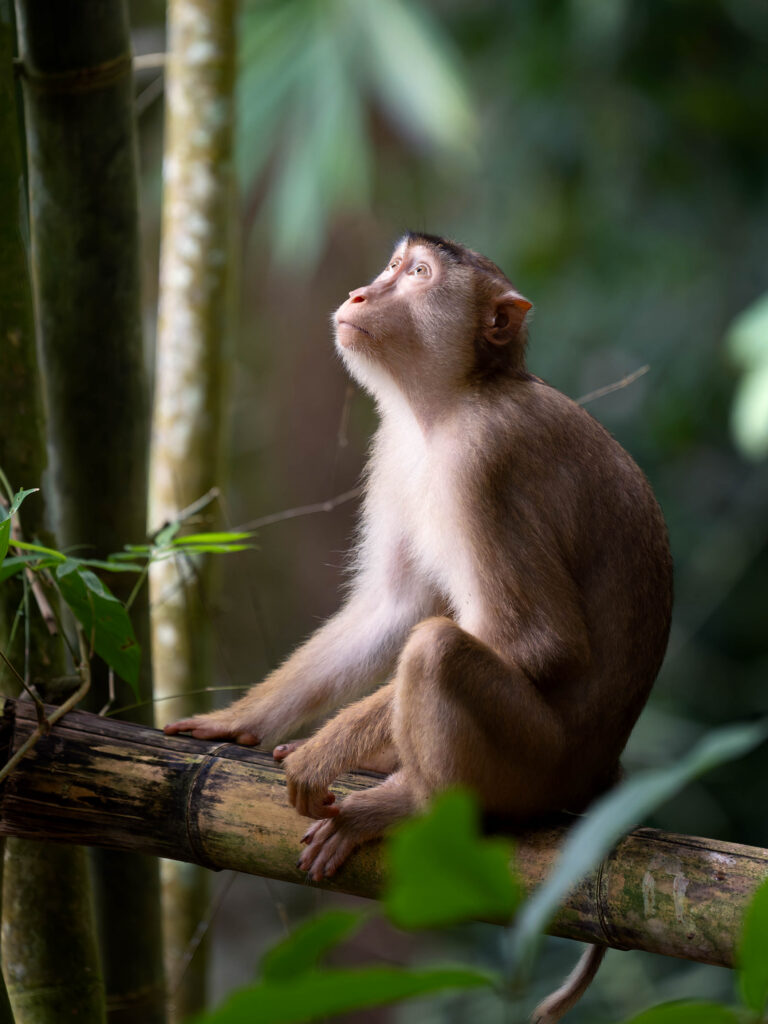
As we decided to stay the entire day at the RDC we needed several rest stops at the cafe. I was actually having a nap when Naomi woke me up due to the commotion nearby. It was a troop of pig-tailed macaques and the staff were not happy about them being so close to the cafe. Some stomping on the ground and shouting by the staff did enough for the monkeys not to come into the cafe, but they hung around outside for a long time afterwards and I spent some quality time photographing them.
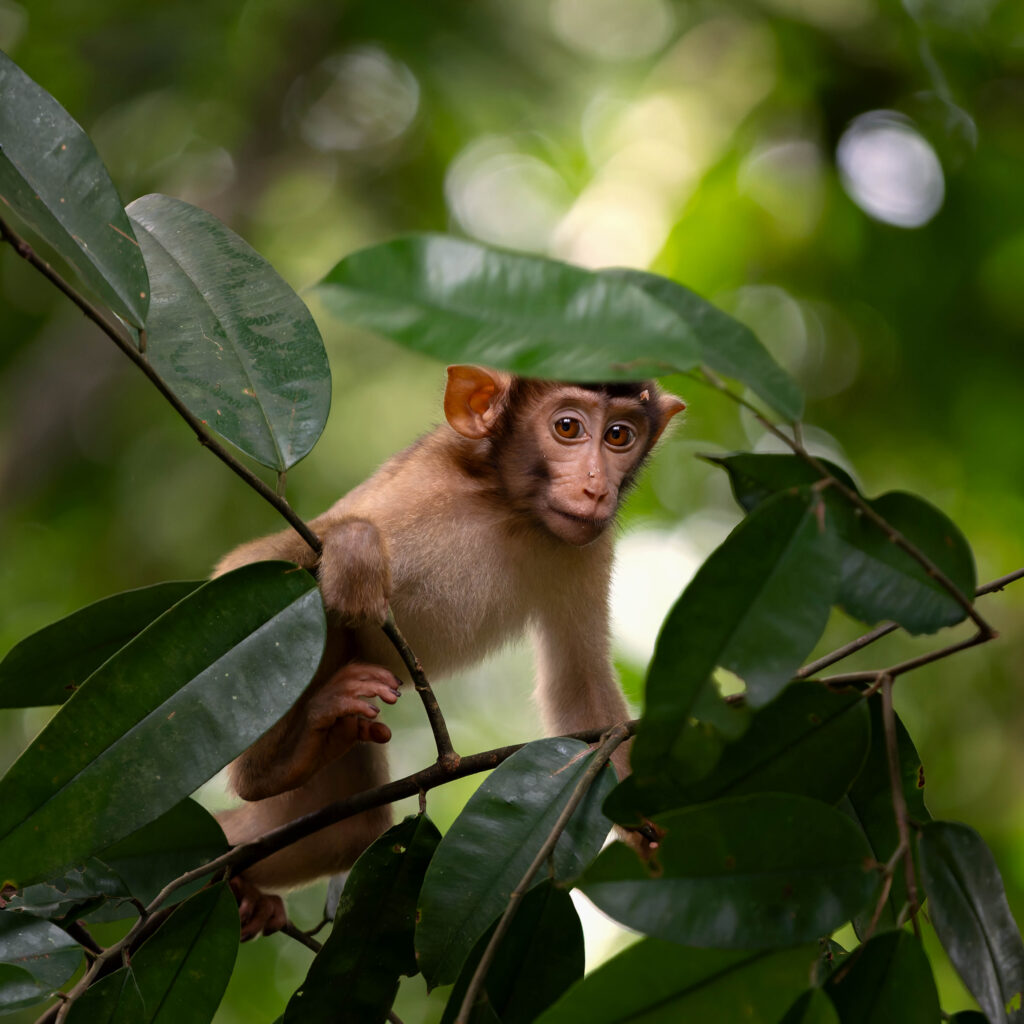
I got a few snapshots of monkeys on the fence, but mostly I focused on the ones that were in the trees for a more natural setting. This was also where the cute young monkeys were mostly to be seen. For the first time of the day I put down the 150-400mm f/4.5 (1.25x) lens and used the 50-200mm f/2.8 instead, and it did not disappoint.
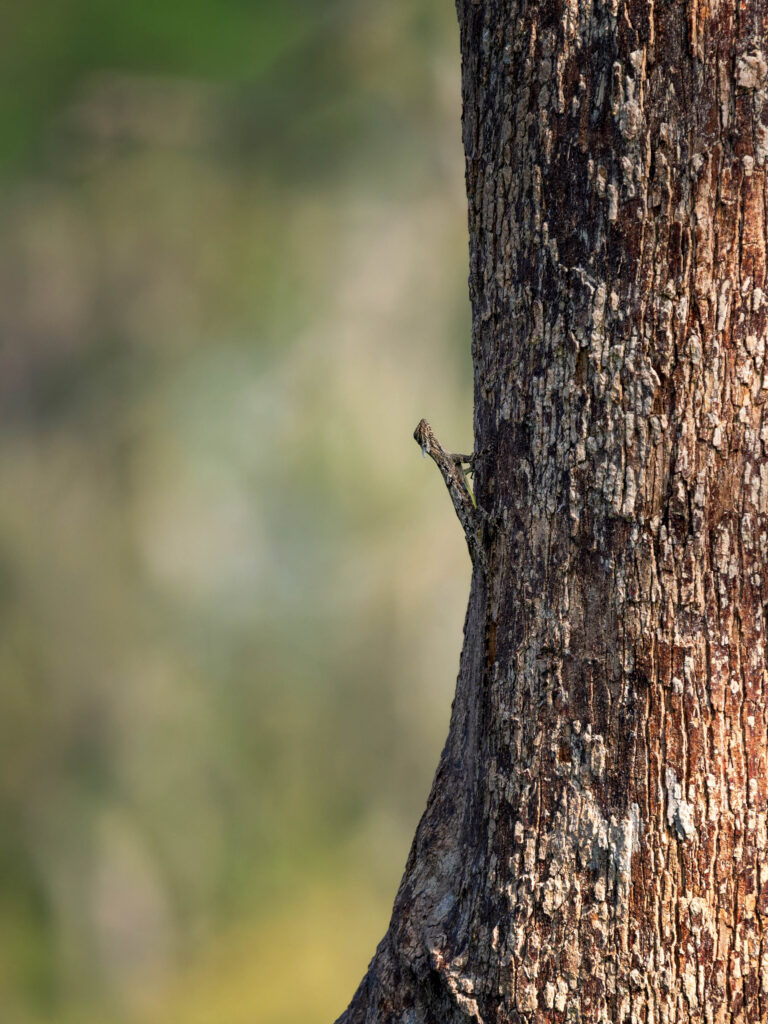
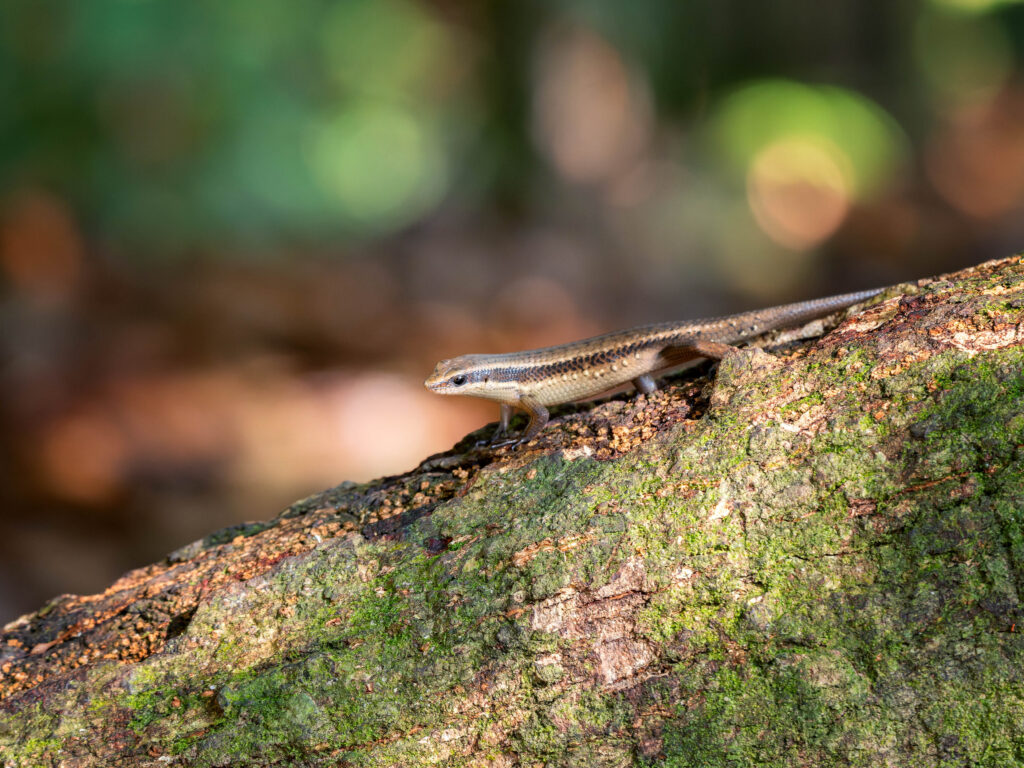
We came across many reptiles on our walks through the RDC, some on trees high up in the canopy and some on the ground in amongst the undergrowth. One of the reptiles high in a tree was pointed out by a guide as a flying lizard. When walking the trails in the RDC we saw many black-banded ground skinks and we could just about glimpse water monitor lizard through the vegetation when walking the Kingfisher Trail.
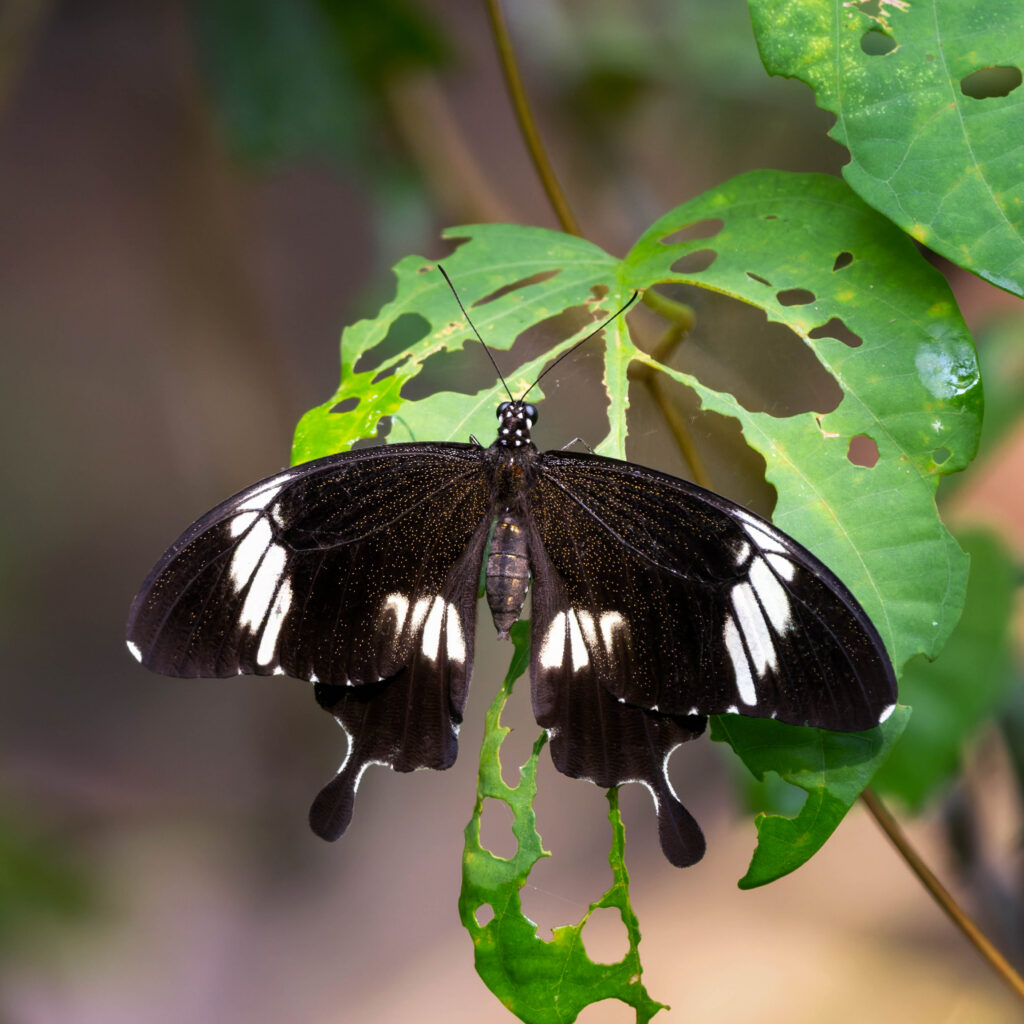
The butterflies in Borneo come in all sizes, shapes and colours. Some were camouflaged like a leaf and all but impossible to spot unless we’d seen it land first. Others were massive and and had a slow undulating flight pattern. Only semi descent image I got was of a beautiful black and white butterfly that landed on a half eaten leaf.
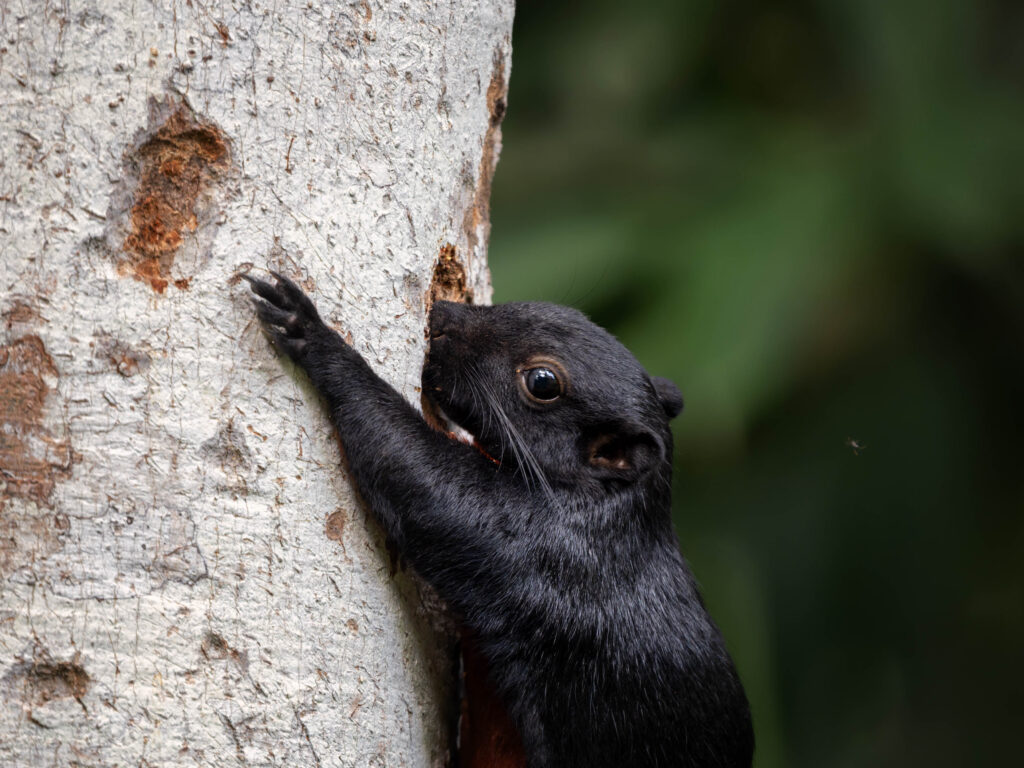
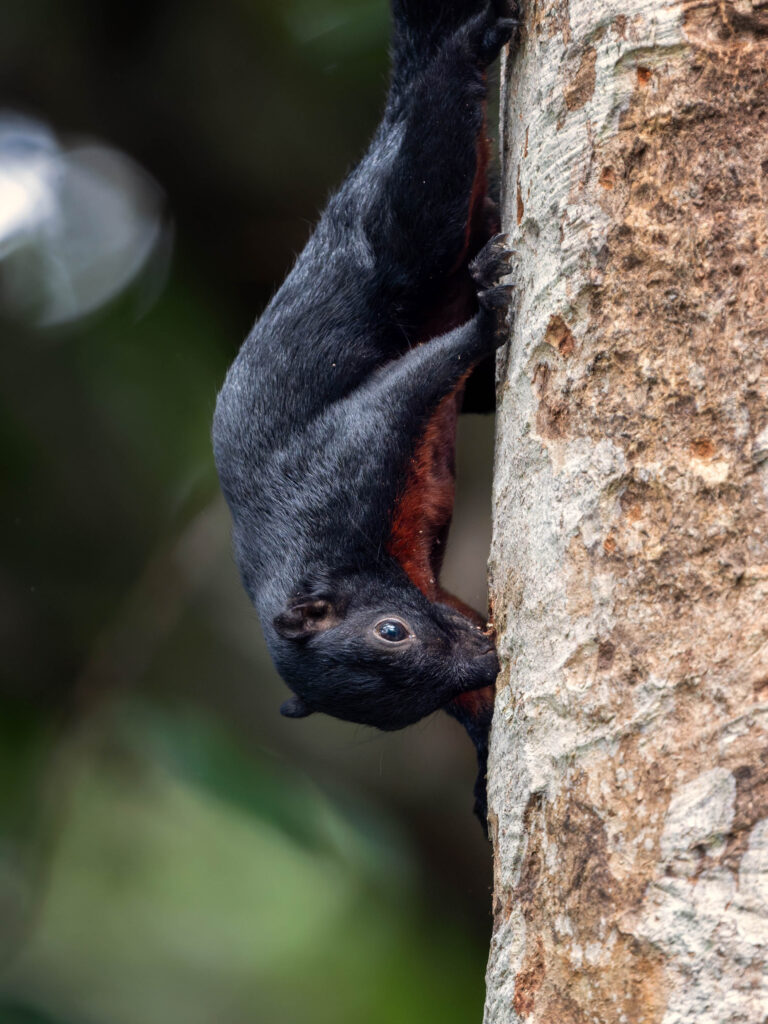
One of the most common mammals besides the primates was the Prevost squirrel, a large black rodent with a red belly. For some fascinating insights into this arboreal mammal check out my partner’s substack post on the Prevost squirrel.
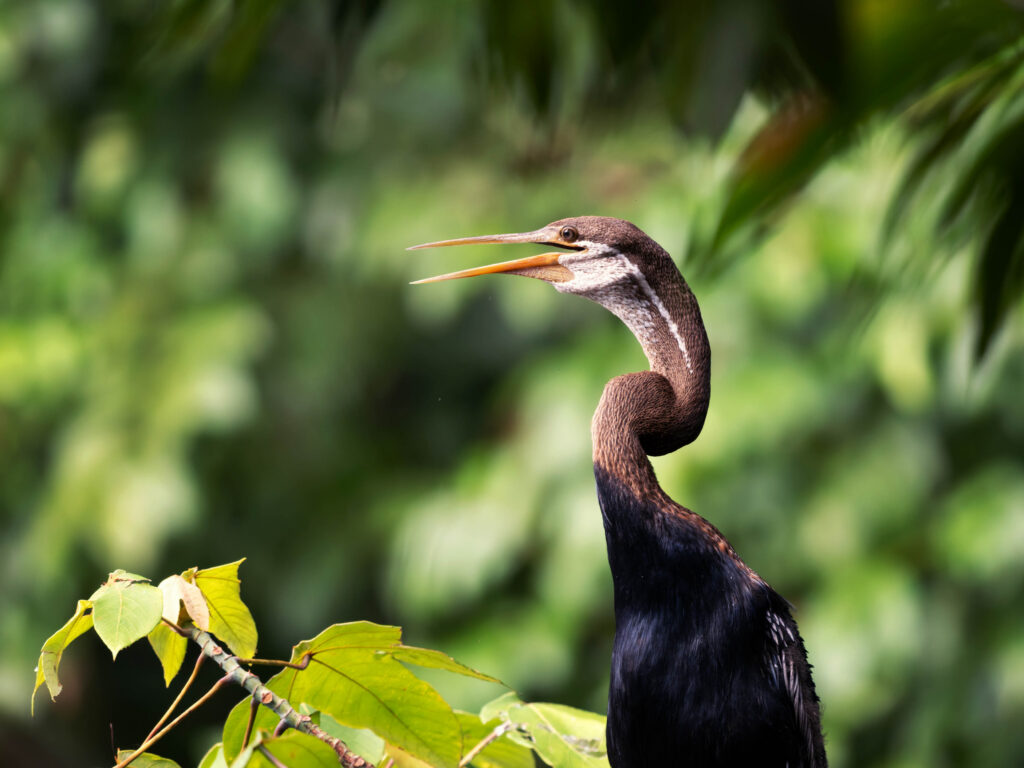
By the water we sat down on a bench for some rest and I got some images of a darter in a nearby tree.
We spent the entire day at the RDC and when we found that they also did guided night walks in the evening we decided to stay for this as well. The night walks were in a group so I didn’t always have time to get good images of the animals, but it certainly stirred a desire to explore more of Borneos forests at night.
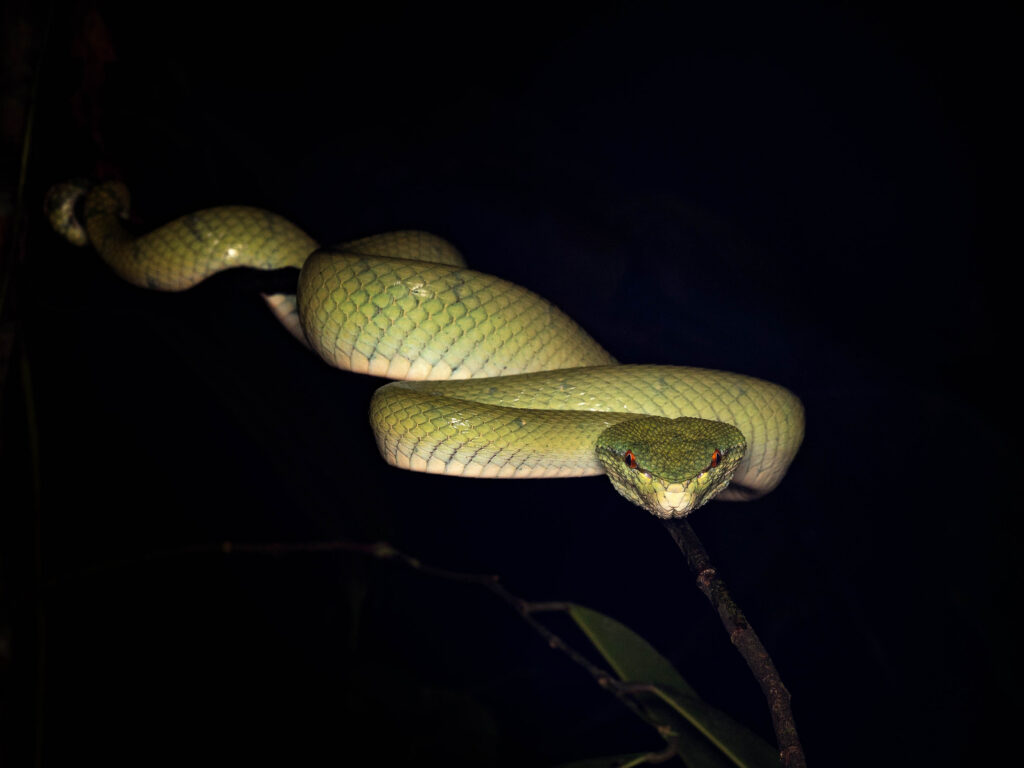
One of the first animals we came across was the Bornean Keeled Green Pit Viper. A venomous, bright green snake with a triangular head that’s usually found lying zigzagged in wait for it’s prey. I was told it could strike at anything within 2 feet so I did not venture too close for a photo of this highly poisonous viper!
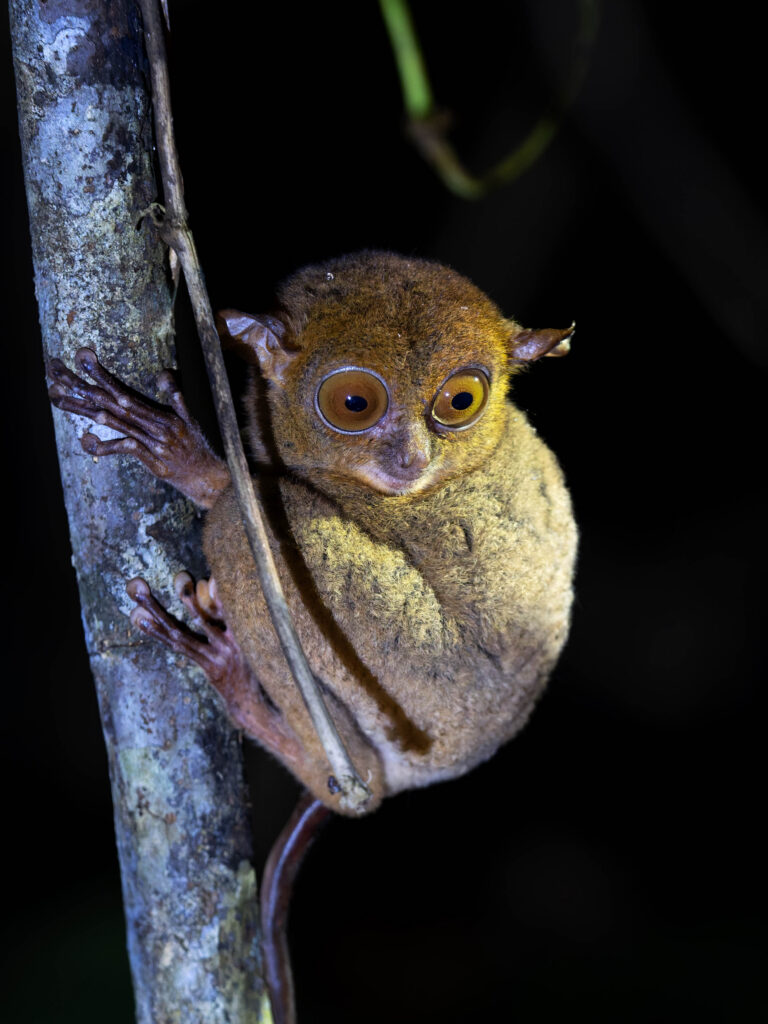
One of the mammals I was really hoping we would see was a tarsier, and sure enough one of our guides, after scurrying through the dense forest for 10 minutes managed to find one! It was the Western Tarsier and just like I’d seen on photos it was clinging to the side of a small tree trunk and it had huge intense eyes. The tarsier is a primate and uses it’s long legs to leap from one sapling to the next as it hunts for large insects in the dark.
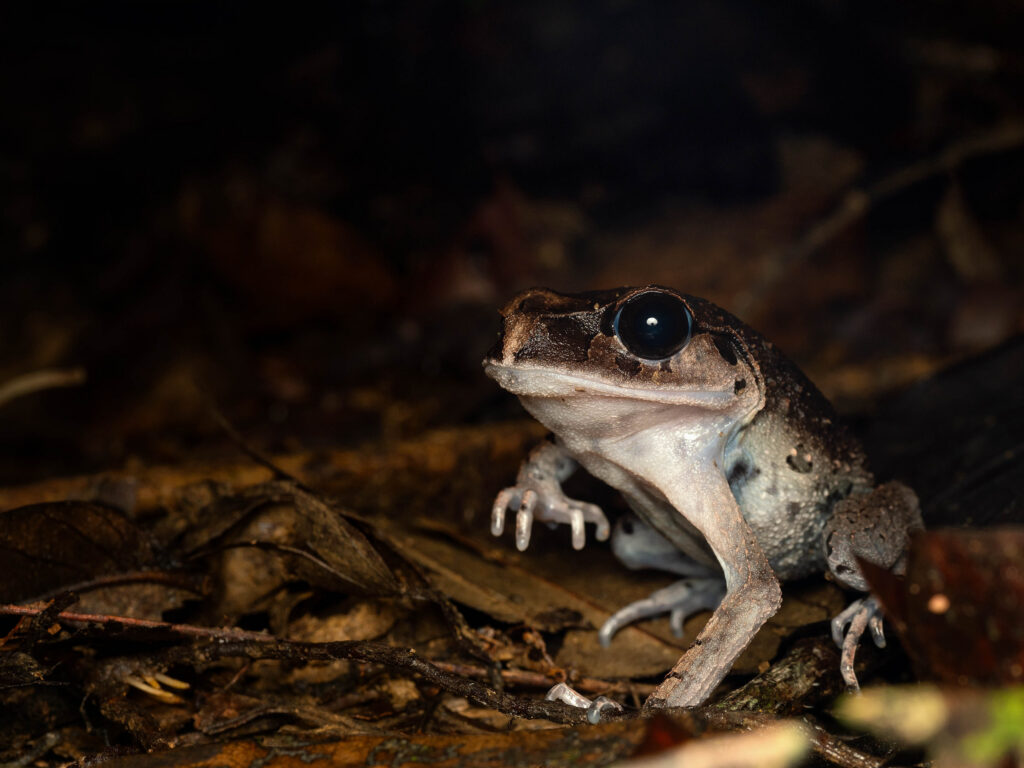
The guides pointed out three different frogs to us, but the only one I could get close to and positioned suitable for a photo was the Lowland Light-eyed Litter Frog.
We’d only landed in Borneo the day before and already we’d seen and experienced so many fascinating new creatures. This was the perfect way to get introduced to some of what Sabah, Borneo has to offer of wildlife and I was excited to explore more of the nature here over the next month.
Sign up to my OM System Newsletter to get a 10% discount code on OM System gear.


be the first to comment