


I’ve had OM System’s flagship camera, the OM-1 Mark II for 2 years. In this post I’ll share some of my best wildlife images that I’ve made with this camera, as well as my opinion on how the camera handles in the field for nature photography.
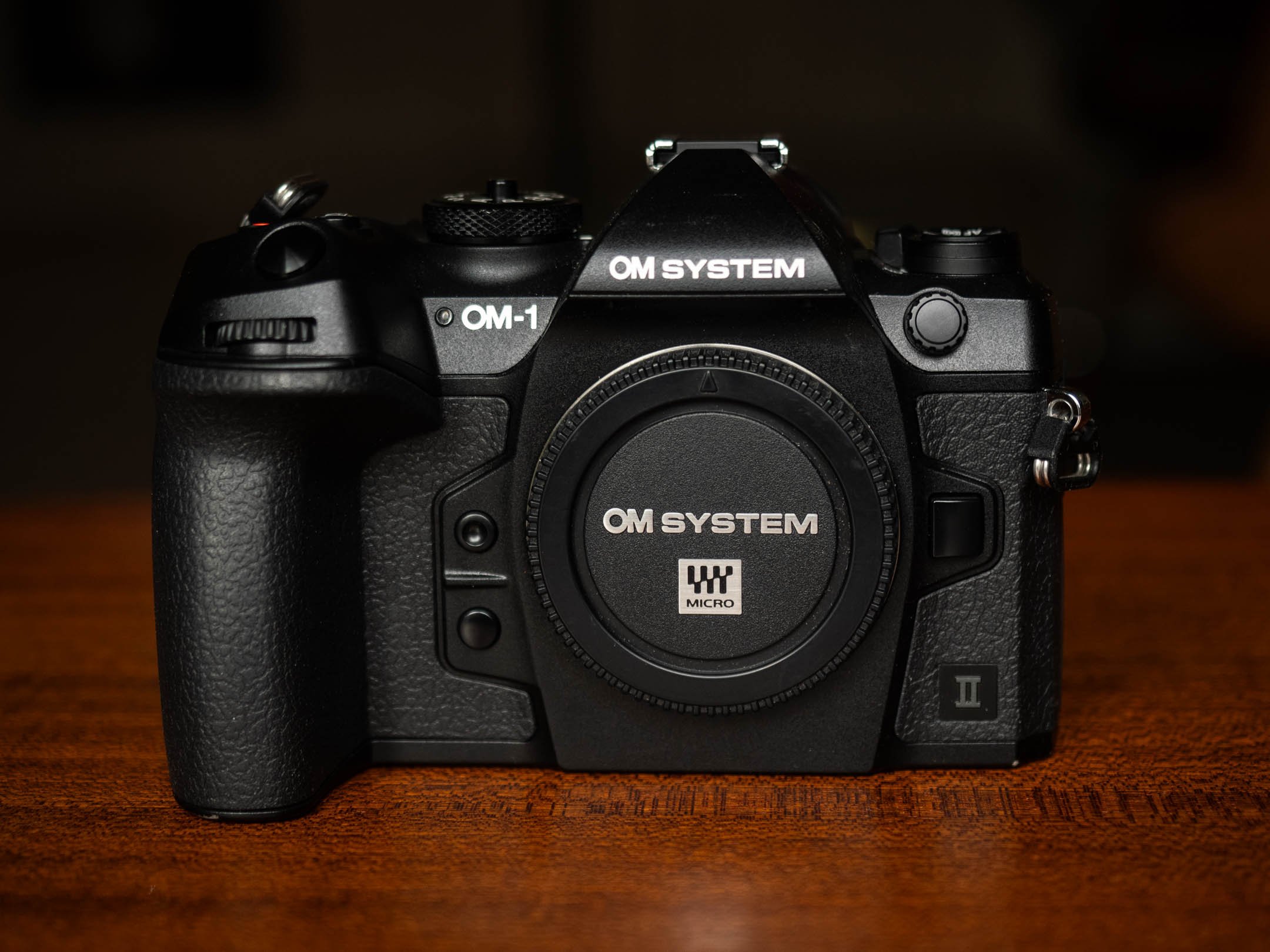
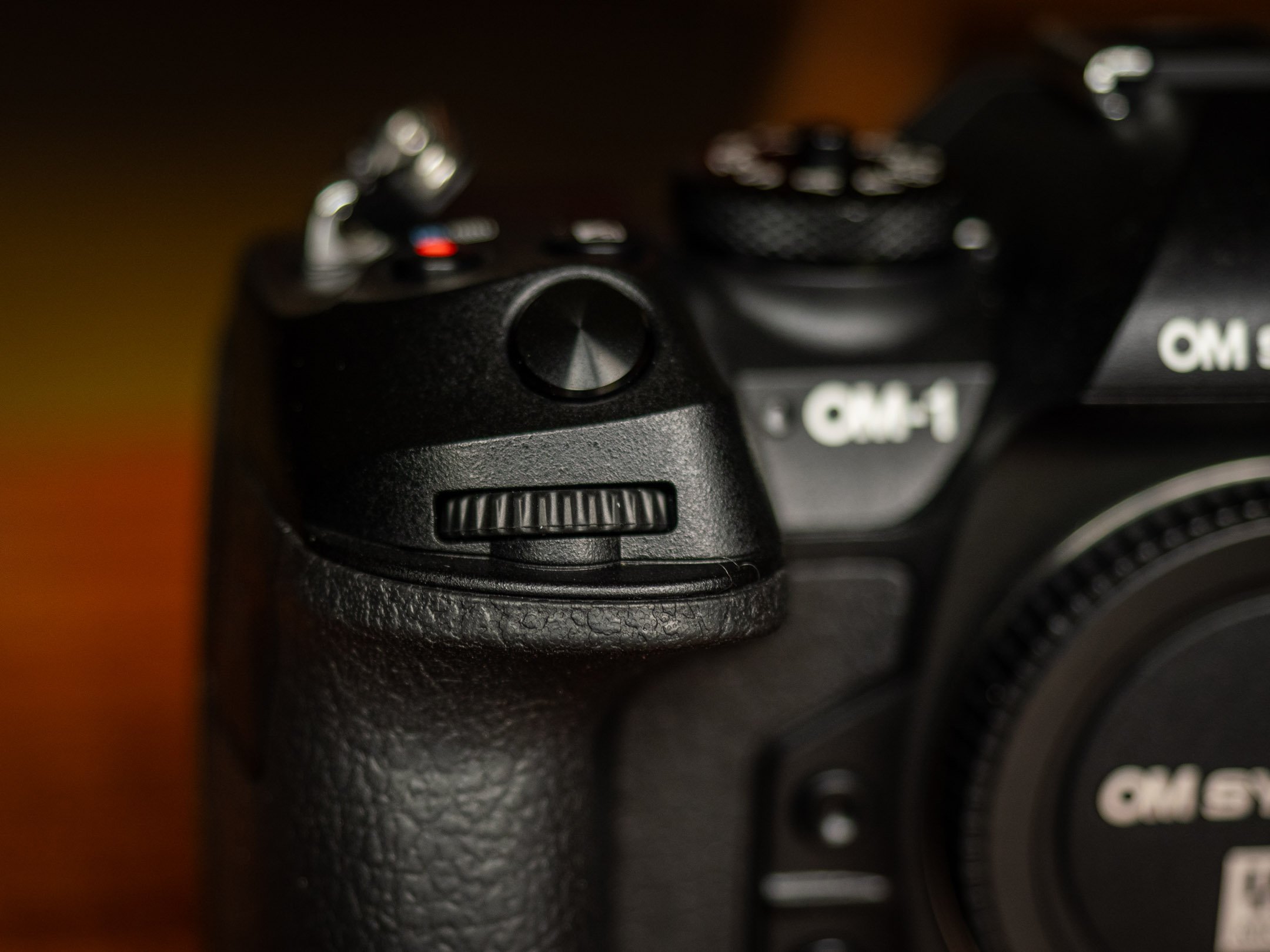
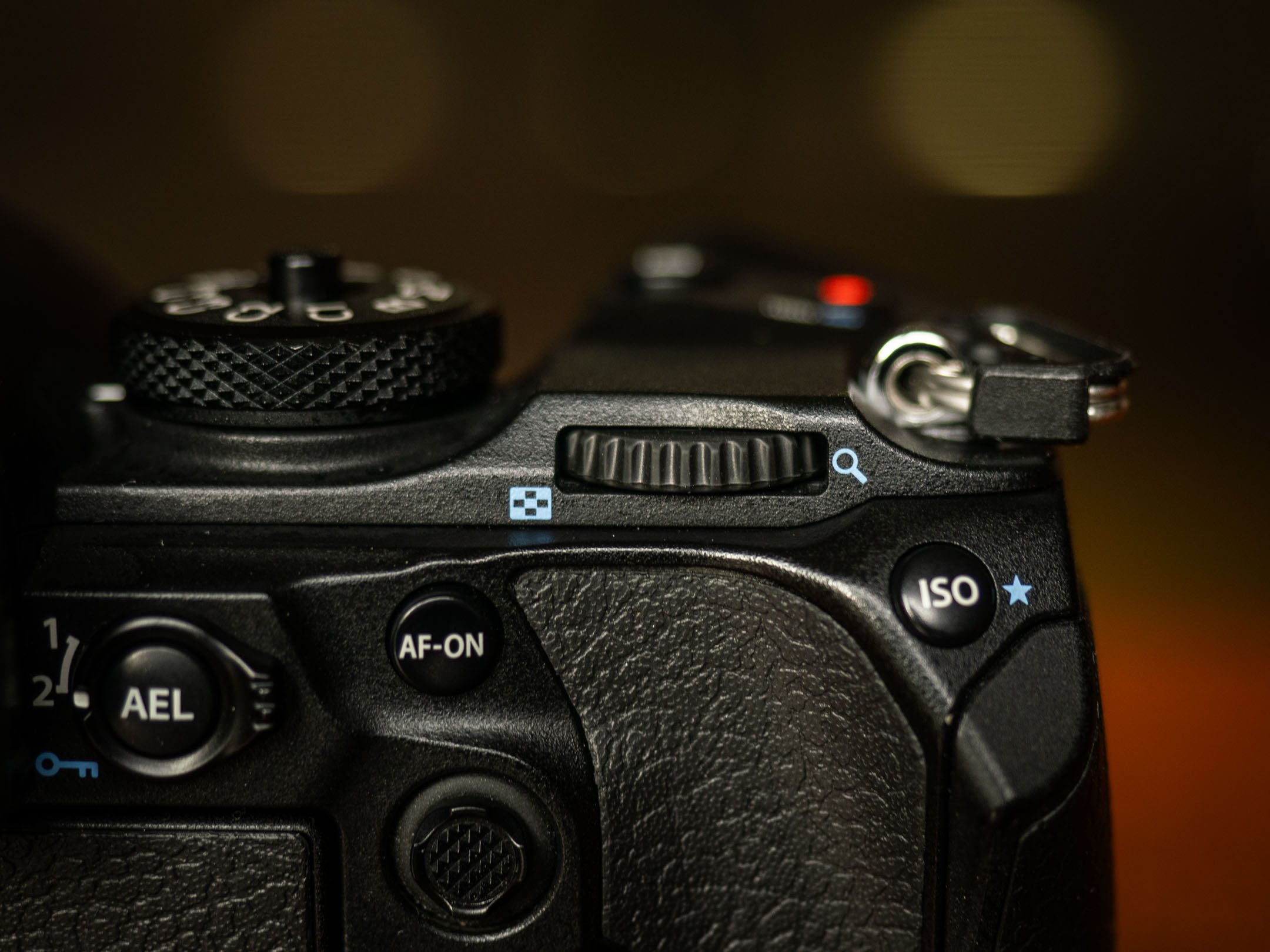
Besides the new name “OM System” and the “II” the body of the OM-1ii looks exactly the same as the original OM-1. The only differences I could make out were the slightly more rubbery feel of the body and dials, which gives a better grip on the camera and the dials feel very easy to rotate. A welcome bonus when I was in Dovre, Norway in -26 degrees celsius and wearing wool mittens, I could still easily rotate the dials.
As with the OM-1 ,the Mark II holds really nicely in the hand and I find it a joy to use in the field.
As a wildlife photographer and someone who spends a lot of time photographing birds, this is the feature that most excites me.
The OM-1ii has improved AI Subject Detection for birds, the ability to lock onto a bird and to choose one bird out of a total of eight birds in the frame to focus on.
I noticed a significant improvement in the camera’s ability to find the bird in amongst twigs and branches and keep tracking the subject. The image of a redpoll is one of several I took where there were branches and twigs both behind and in front of the bird and the camera AI Subject Detection picked up the bird and acquired focus easily.
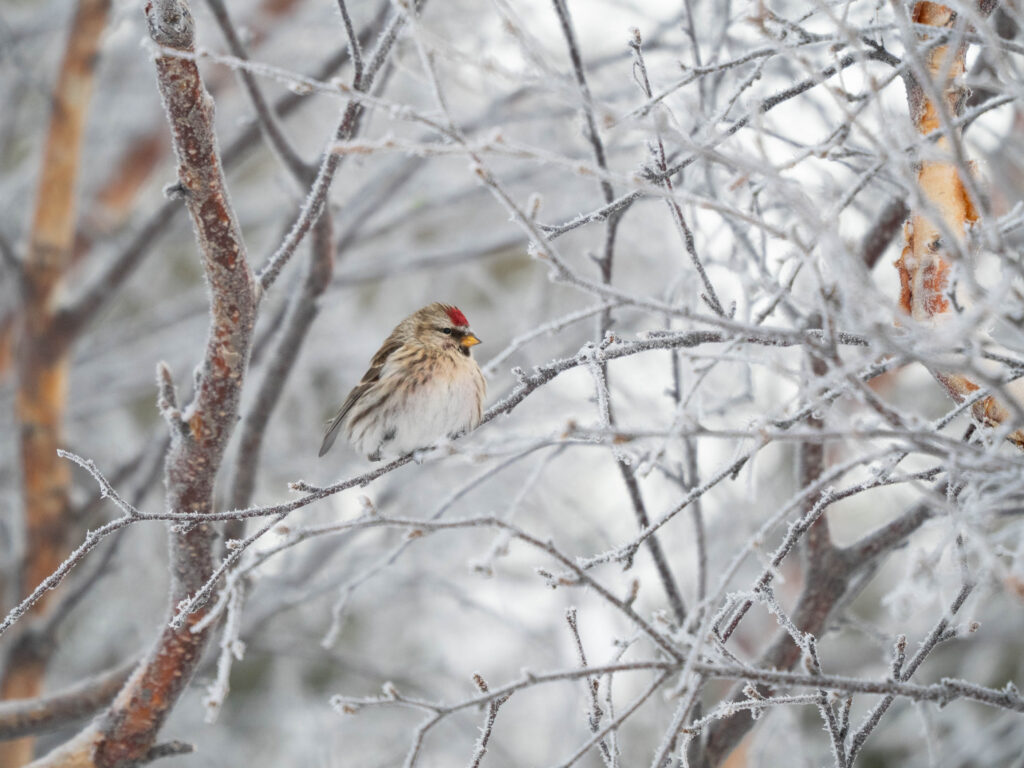
After two years of usage I still think the OM-1ii had better subject detection for birds than the original OM-1 (which is still really good), but it can still struggle to focus on birds in very cluttered environments or when the bird is half hidden. Certain birds may also be fooled due to the extraordinary plumage it has.
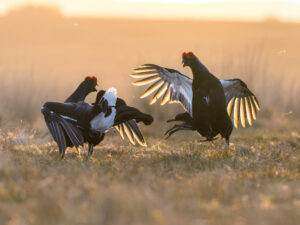
Every April I take people out to photograph black grouse on a lek in Perthshire, Scotland and I often find that the bird subject detection may be fooled by this bird. Instead of focusing on the eye of the bird, it sometimes gets fooled and thinks the eye is somewhere, ahem, to the rear…

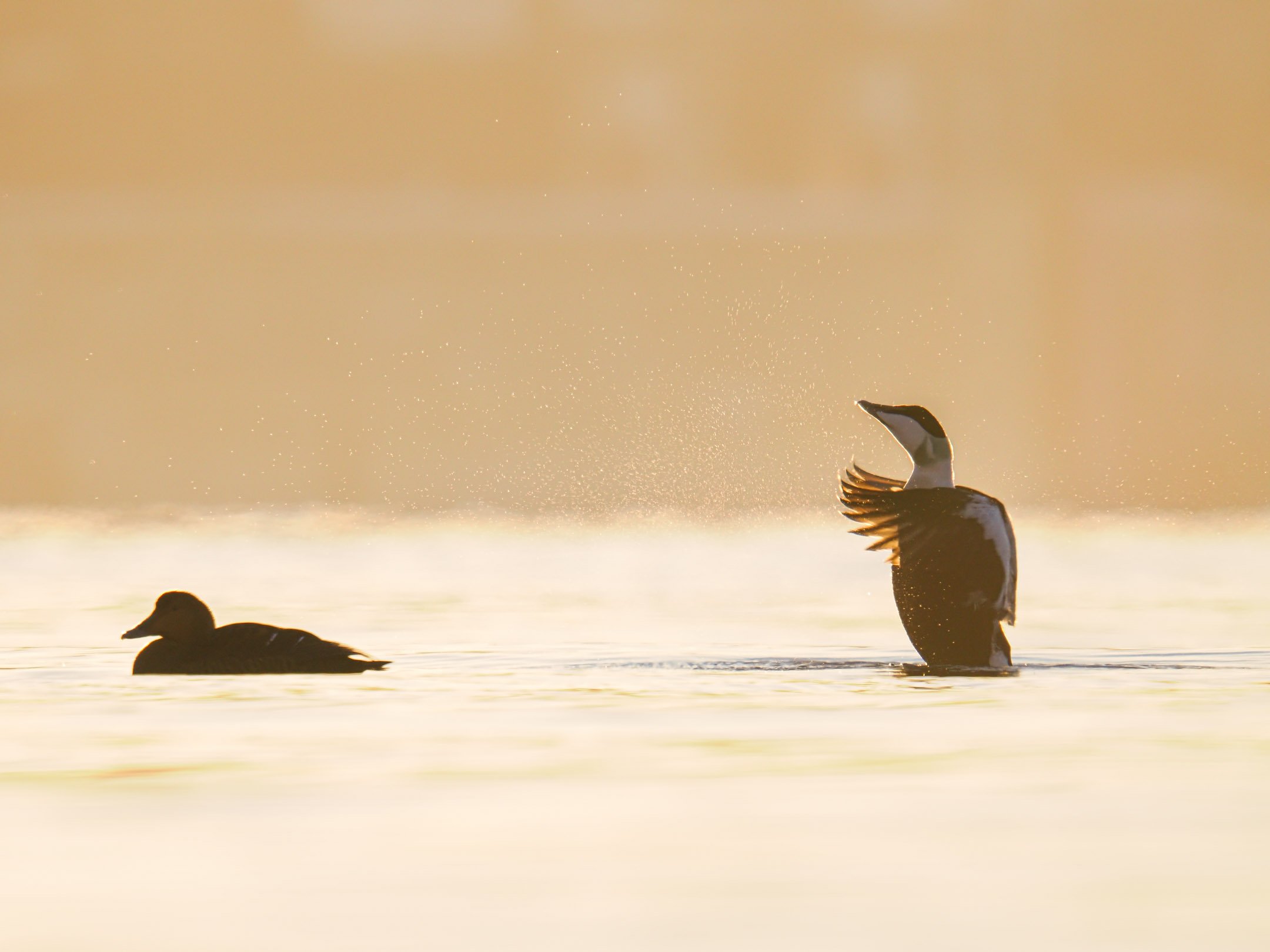
I was also impressed with the Bird AI Subject Detection to pick up a distant eider duck in backlight using the new M.Zuiko 150-600mm f/5-6.3. I’ve often had issues using subject detection on birds in water, especially distant birds and in in backlight.
The ability to choose the individual bird to focus on is a very welcome feature that I’ve missed in the OM-1. I found that locking the focus on a particular bird would focus on that bird, but if another bird came nearby the AI Subject Detection could be fooled and the focus jump to the other bird.
Having experimented with the subject detection locking function many times since the camera was first published, I don’t find it that useful to my workflow. I find that it doesn’t lock well enough on a subject and if it jumps over to a different subject it’s difficult to control, and I can’t get it back to the original subject fast enough.
I’ve found a work around that works better for me and I find that I have much more control this way. This is something I go over in a video in the OM Club.

The OM-1ii has 8.5 EV stops of image stabilisation!
I tend to mostly photograph handheld and well as film handheld. When I was at Dovre using the M.Zuiko 150-600mm f/5-6.3 it was extremely useful to be able to film handheld at these extreme focal lengths and get steady footage.
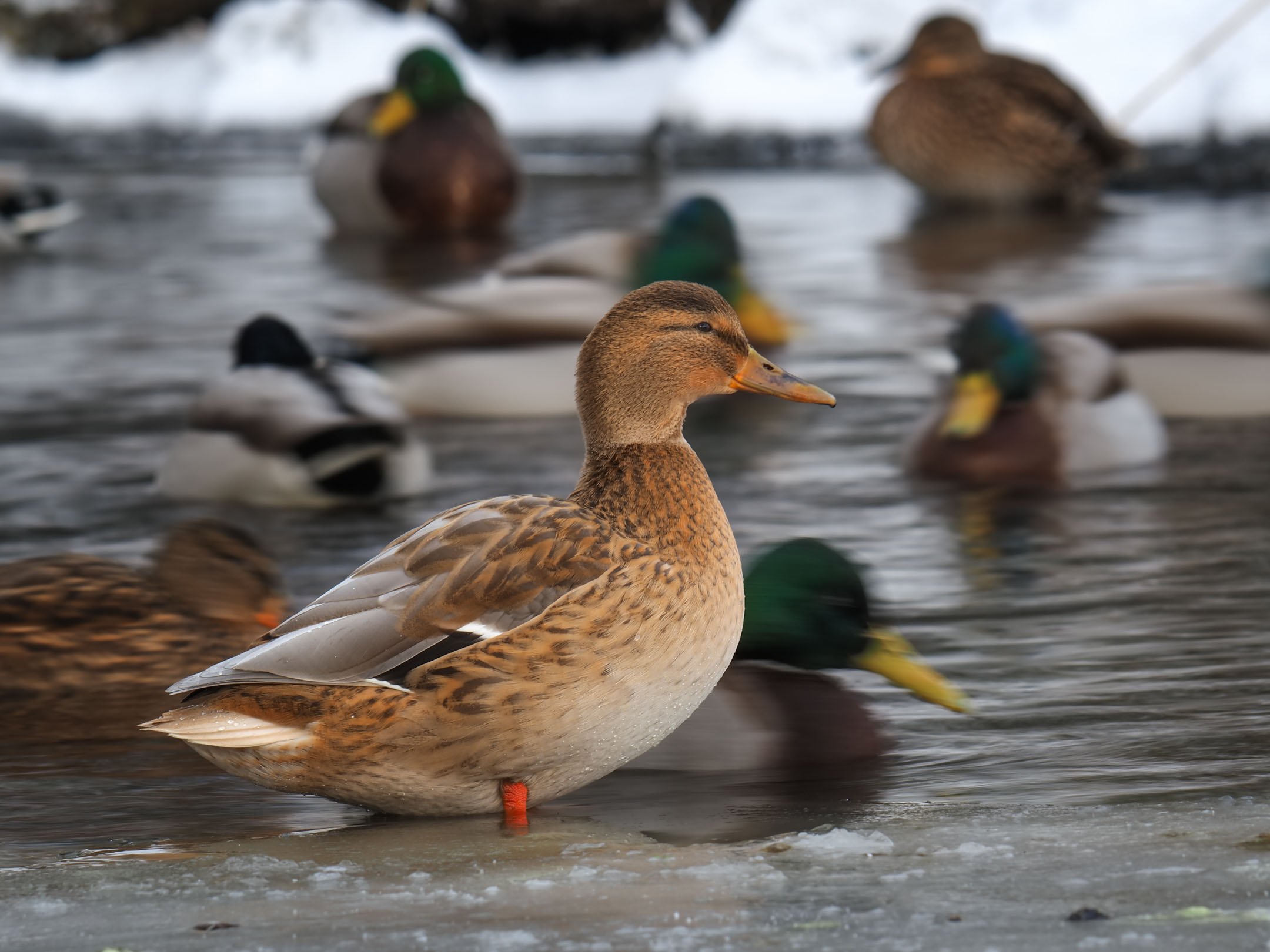
I photographed this female mallard duck with the M.Zuiko 150-600mm f/5-6.3 at 1/8s shutter to see if I could blur out the other ducks as they were swimming.
Enhanced Blackout free shooting. You can now get blackout free shooting when using the SH2 shooting mode, you can choose between 12.5, 16.7, 25 and 50 FRP (frames per second).
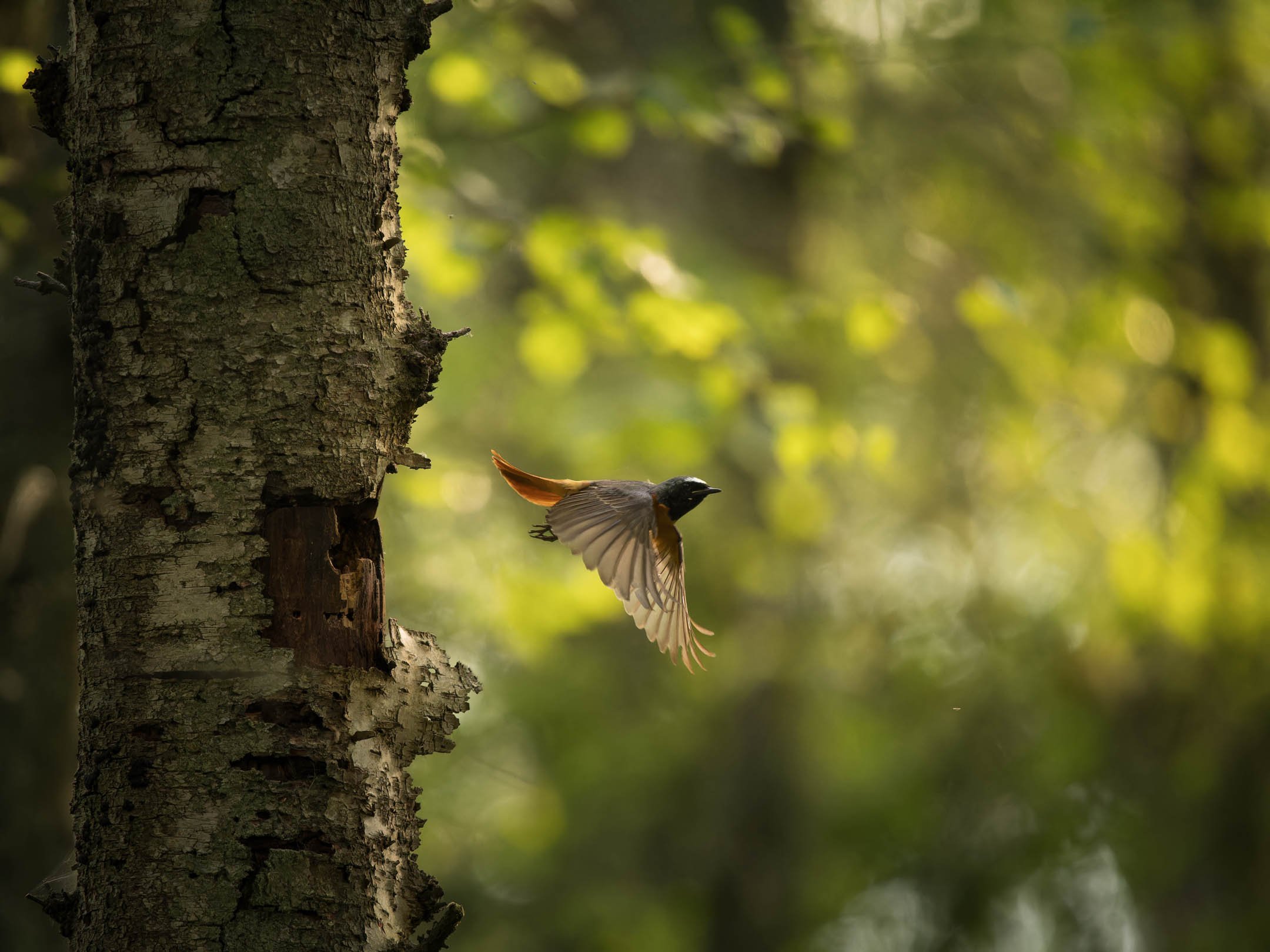
Pro Capture with an updated 2x buffer – this is very beneficial and for me this will be great coming into spring for woodland birds flying to and from their nests which is when I really tend to use Pro Capture a lot.
I captured the redstart using the OM-1 Pro Capture with the 150-400mm 1.25x last spring.
Want to join me photographing birds in flight using Pro Capture in Perthshire Scotland this spring? Check out my workshops page!
Redstart | OM-1, 150-400mm 1.25x, 400mm, f/4.5, 1/2500s, ISO 6400 Pro Capture
Great for getting that smooth flow of water without filters – I even try this sometimes for wildlife. If I can get a bird sitting still for a second with water moving around it, such as a dipper or a heron. This feature goes great with the 8.5 stop IS as I rarely use a tripod.
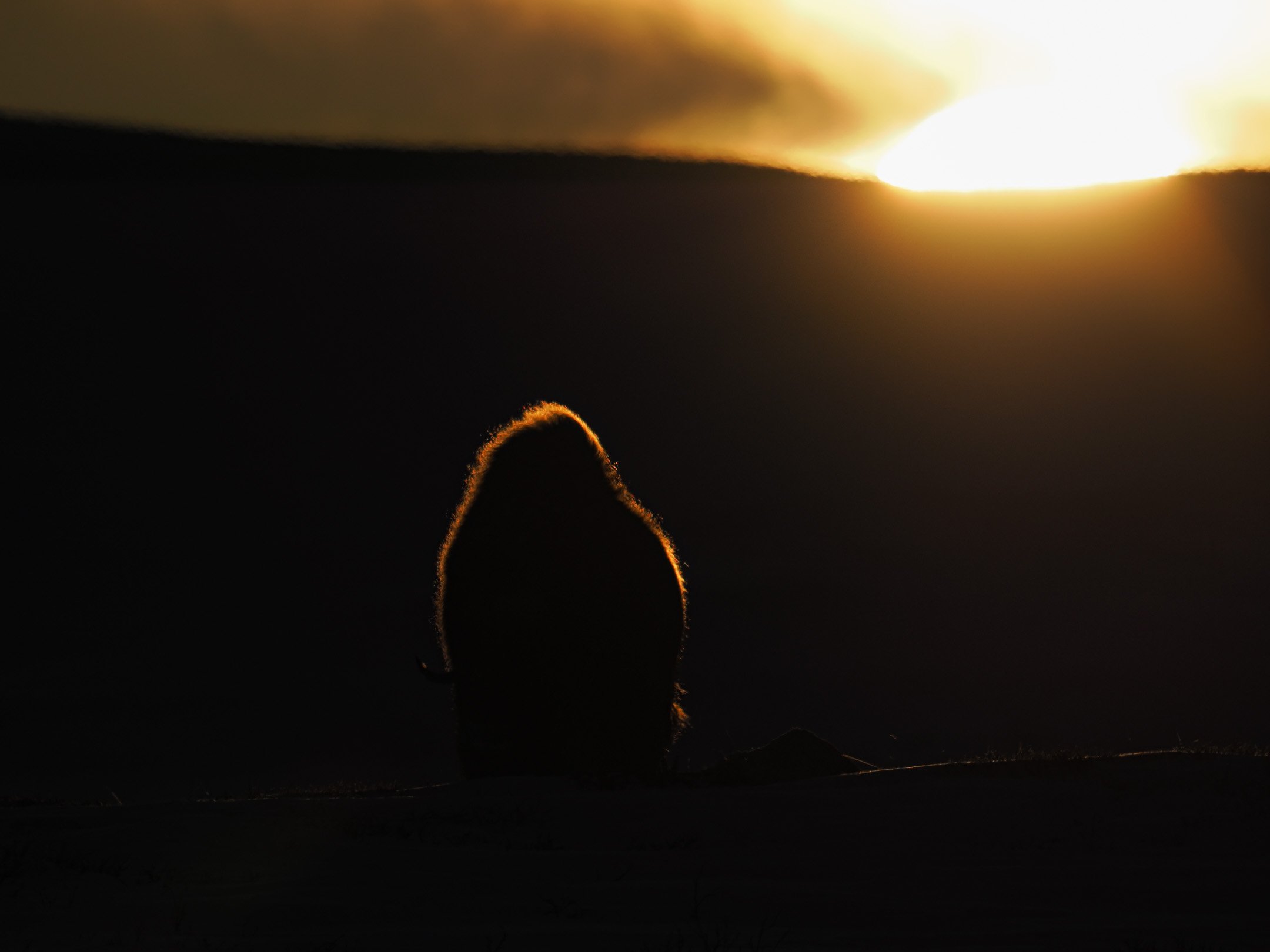
Backlit muskox |
A very interesting feature, I often go for long walks with my camera and I take the occasional landscape images, but not enough to bring filters on my walk. So I can see this feature be excellent for opportunistic landscape images.
High Res mode is a feature I use fairly regularly and I have a quick button setup for this feature. For occasional landscape shooting, after I find my composition I tend to switch to High Res and get a larger file with more details. With 14 bit I can get enhanced colours though with a larger size file.
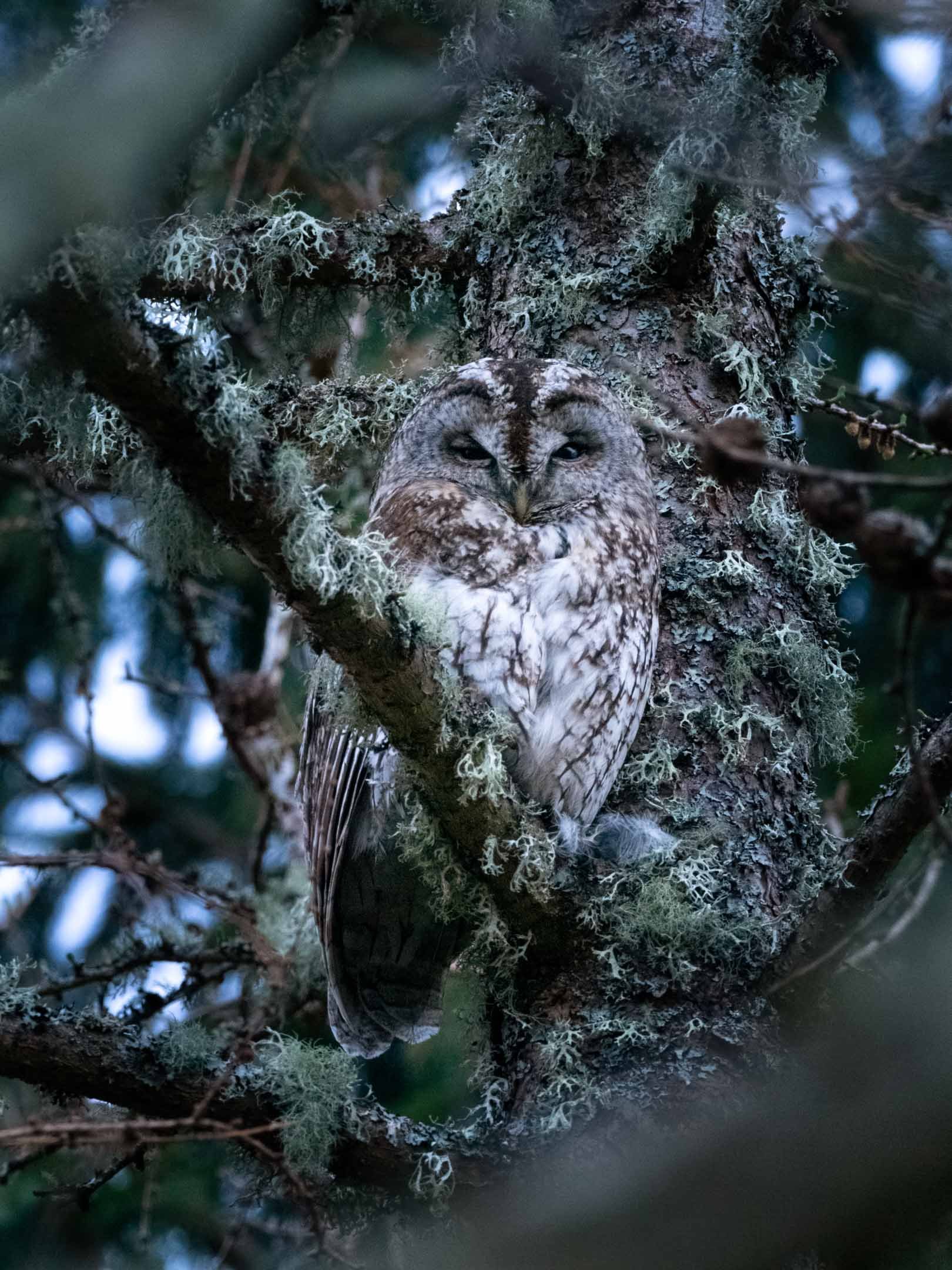
After the faster processing of High Res photos in the original OM-1 I tend to use this feature for wildlife that stands still. I captured a tawny owl at ISO 16000 at twilight with high res and it meant that I got no noise in the image as well as a higher detailed image.
Tawny owl | OM-1, 300mm 1.4x, 420mm, f/5.6, 1/60s, ISO 16000 High Res Handheld
In the OM-1ii you can now chose human subject detection
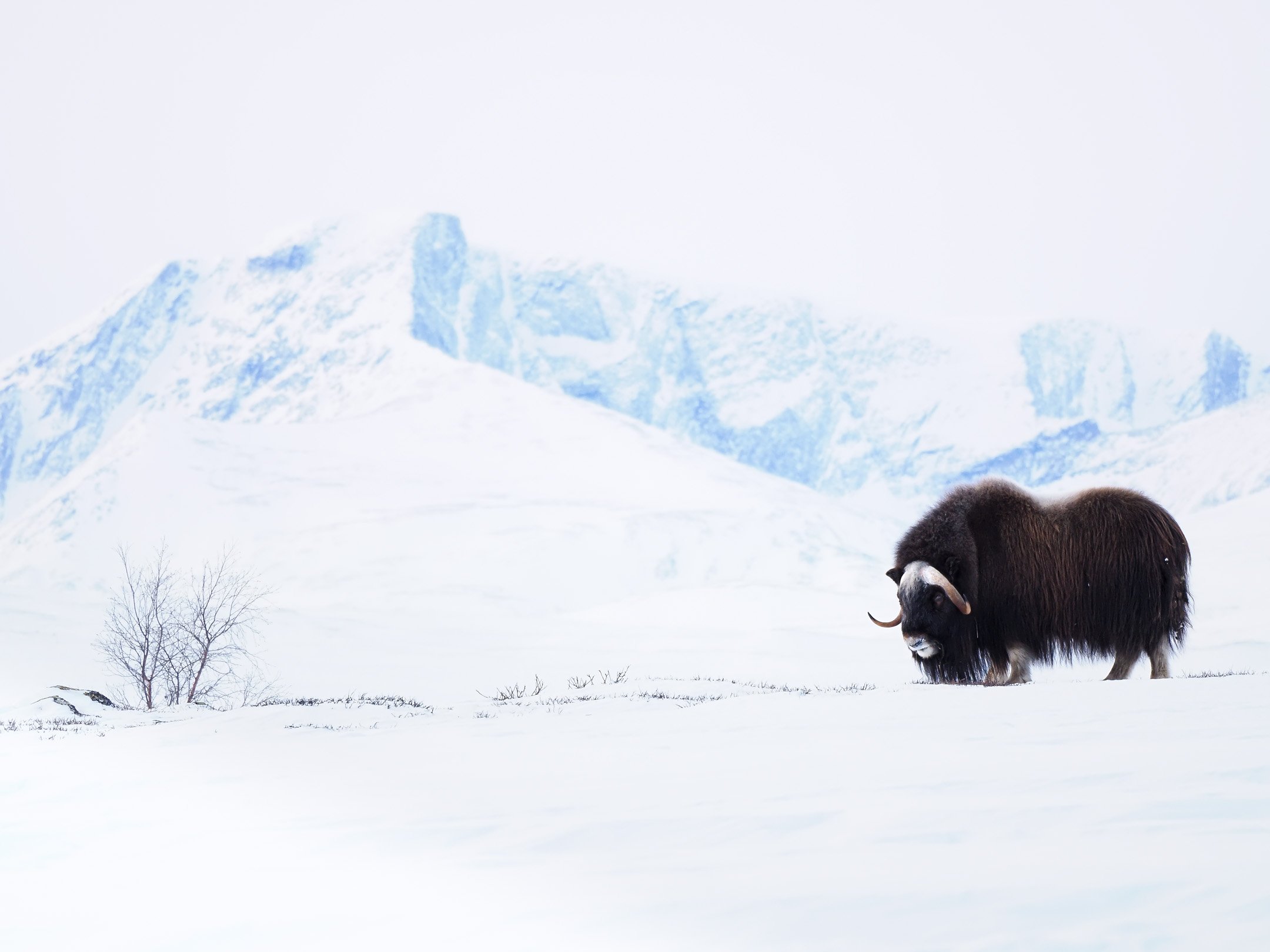
Muskox | OM-1ii, 150-400mm 1.25x, 500mm, f/5.6, 1/320s, ISO 800
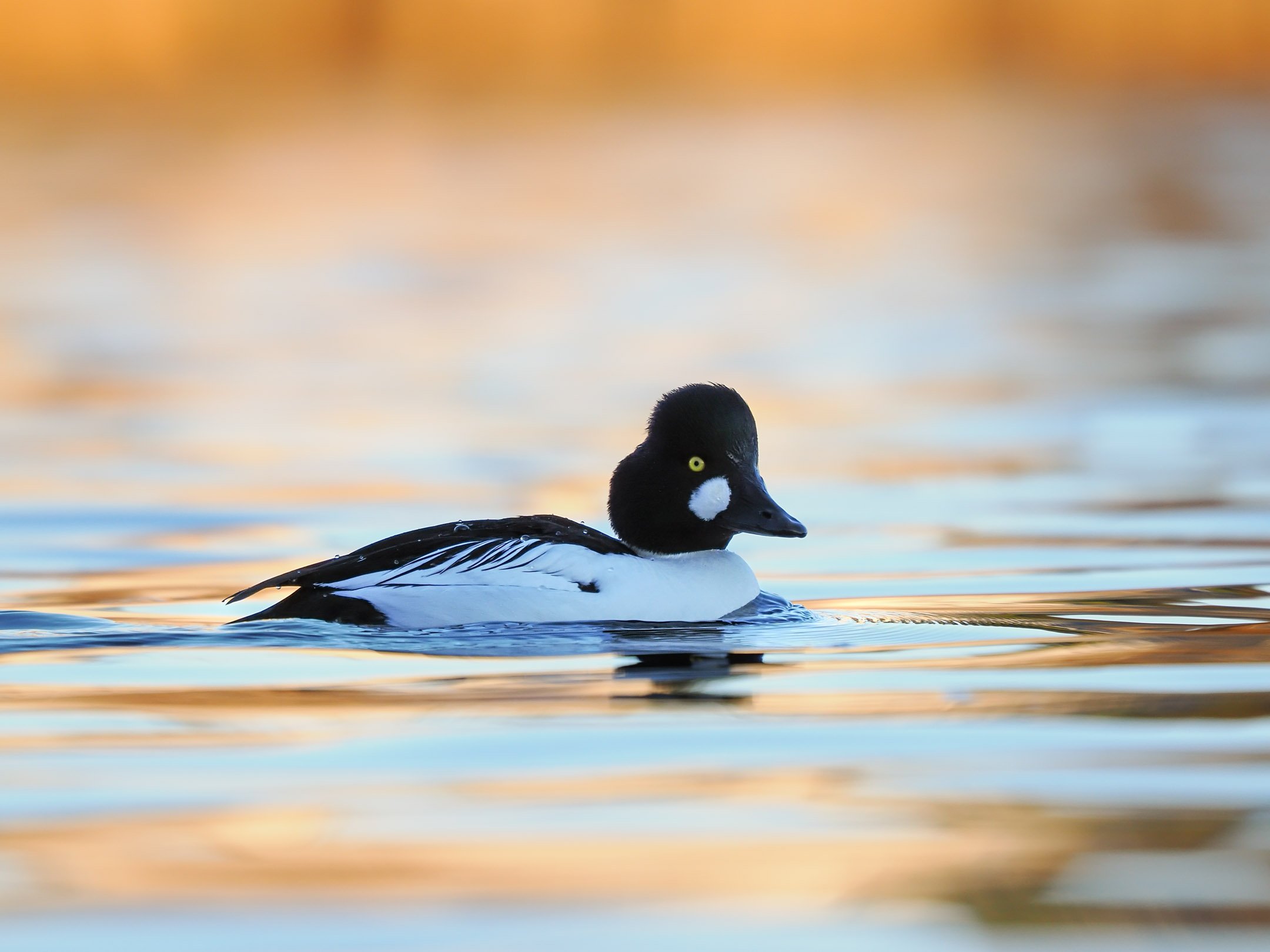
Goldeneye | OM-1ii, 150-400mm 1.25x, 500mm, f.5.6, 1/640s, ISO 800
In conclusion, the new OM-1 Mark II doesn’t have any revolutionary updates. However, I see some significant useful benefits for me as a bird photographer and improvements that will benefit anyone who likes photographing nature.




be the first to comment